Ever since ChatGPT exploded onto the scene a few years ago, people have asked me, “How worried are you that AI will replace you as a copywriter or marketer?” Honestly, it’s been difficult to say “Not at all” without sounding naïve, in denial, or even just plain old.
But here’s the thing: for the last few years, if you tried to create an ad on Facebook/Instagram or Google, they would automatically suggest AI-generated ad copy. Their suggestions are awful, robotic, and often weird. I would never waste my clients’ money on them.
These technology powerhouses have archives of millions of samples to draw from, employ the best data scientists and programmers in the world, and still can’t compete with a reasonably skilled human writer.
This is all my opinion, of course, and I didn’t have any 3rd-party validation for what I instinctively knew: AI-generated marketing text is a bad idea.
Absolute statements require absolute proof.
Recently, Harvard Business Review published the excellent AI-Generated “Workslop” Is Destroying Productivity that, without intending to, validated much of what was instinctively obvious.
Specifically, the HBR study focused on interoffice communication and how AI pushes the burden of proof and the thinking from the sender to the recipients, which reduces the effectiveness of the entire team.

Recipients of workslop are understandably annoyed, and that undermines teamwork and personal relationships, which seems obvious when it’s spelled out. Workslop senders are viewed as less creative, capable, and trustworthy by their peers.
How much would you pay to annoy your best prospects?
What’s interesting and relevant about the HBR study is its likely transference to marketing.
If your own co-workers think less of you for using ChatGPT, how will prospective customers and clients feel?
Put another way, traditionally, as a rule of thumb, 10% of the cost of advertising is in creative development and 90% is in media. Using AI to save a few dollars on the 10% side of the equation is a huge risk to take when it can easily reduce the effectiveness on the 90%.
Of course, where AI does make a huge difference is in media buying where massive data sets are crunched to find every advantage for the media companies selling impressions and clicks.
Now look at your email inbox.
Email is tricky. Even something as conceptually simple as Open Rate is difficult to calculate due to Apple’s heightened privacy initiatives on iPhones, but I’ve seen published numbers as high as 50%, which I don’t believe. HubSpot, which enforces high standards for its subscribers, will tell you that 20% is a good target and the only way to achieve this is to systematically eliminate people who don’t open email.
So, the reality for a targeted list you own, Open Rates are more in the 10% range and for a spam list (not recommended!) considerably less, probably in the 1-5% range.
Should you risk alienating the few people who open your email by sending them AI slop? Should you risk incurring the wrath of spamblockers by sending AI slop?
The answer seems pretty certain: no!
But, in the interest of science, I decided to do a little research on my own inbox and I ran a dozen messages through GPTZero, an AI detection tool I use to vet freelancer submissions. The results were mixed, mostly leaning towards human-written copy. The ones it flagged as AI were generally pretty obvious.
Then I did the same with my Spam folder and saw pretty much the same results. Honestly, I was a bit disappointed. Maybe spammers are just too cheap or lazy to implement cutting-edge technology!
So, where does this all net out?
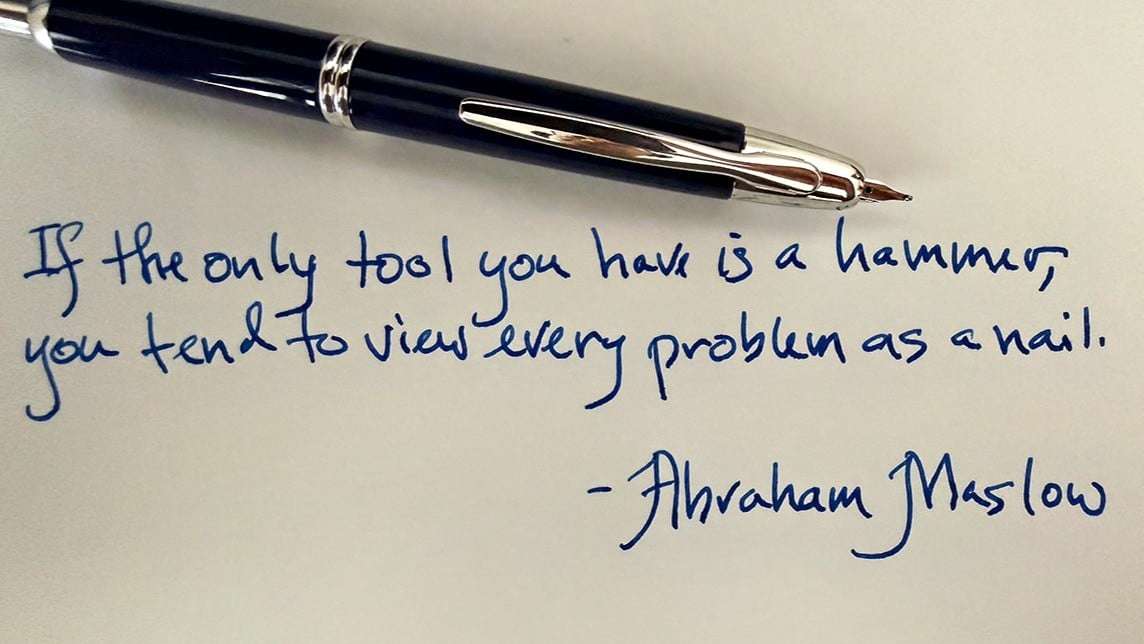
There are no shortcuts.
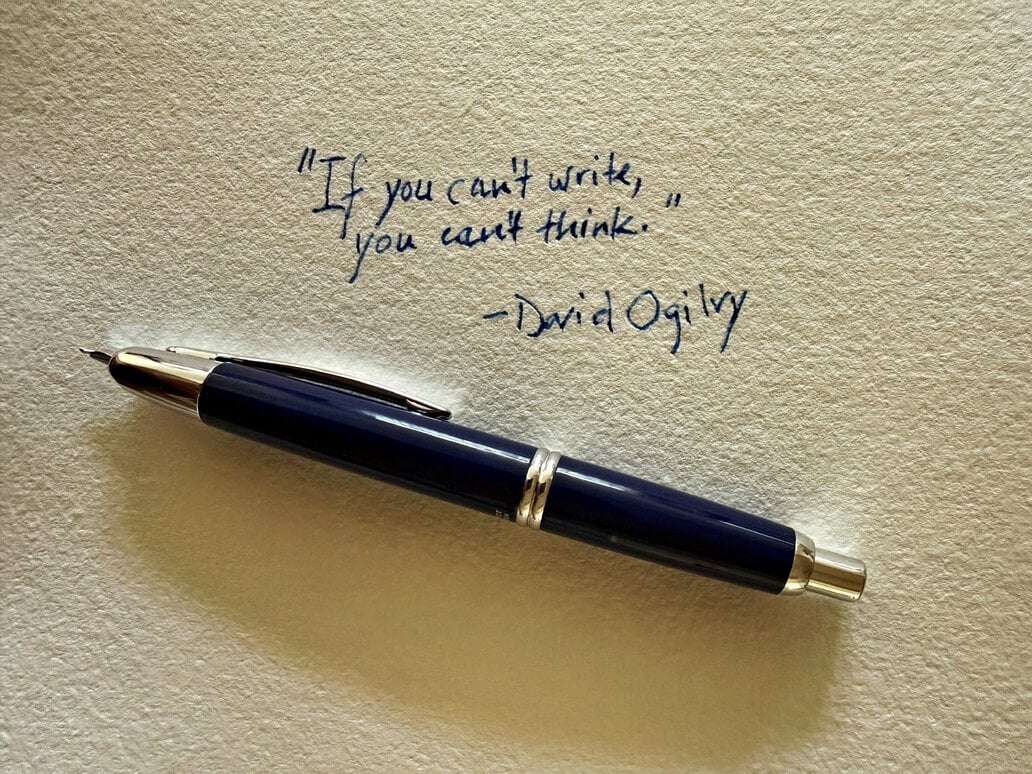
If you’re outsourcing your thinking to AI, you’re only fooling yourself.
People buy from people and companies that engage with them. Real engagement is hard work that requires actual thinking, understanding, empathy, and creativity. It takes trust, it takes effort, and it takes time.
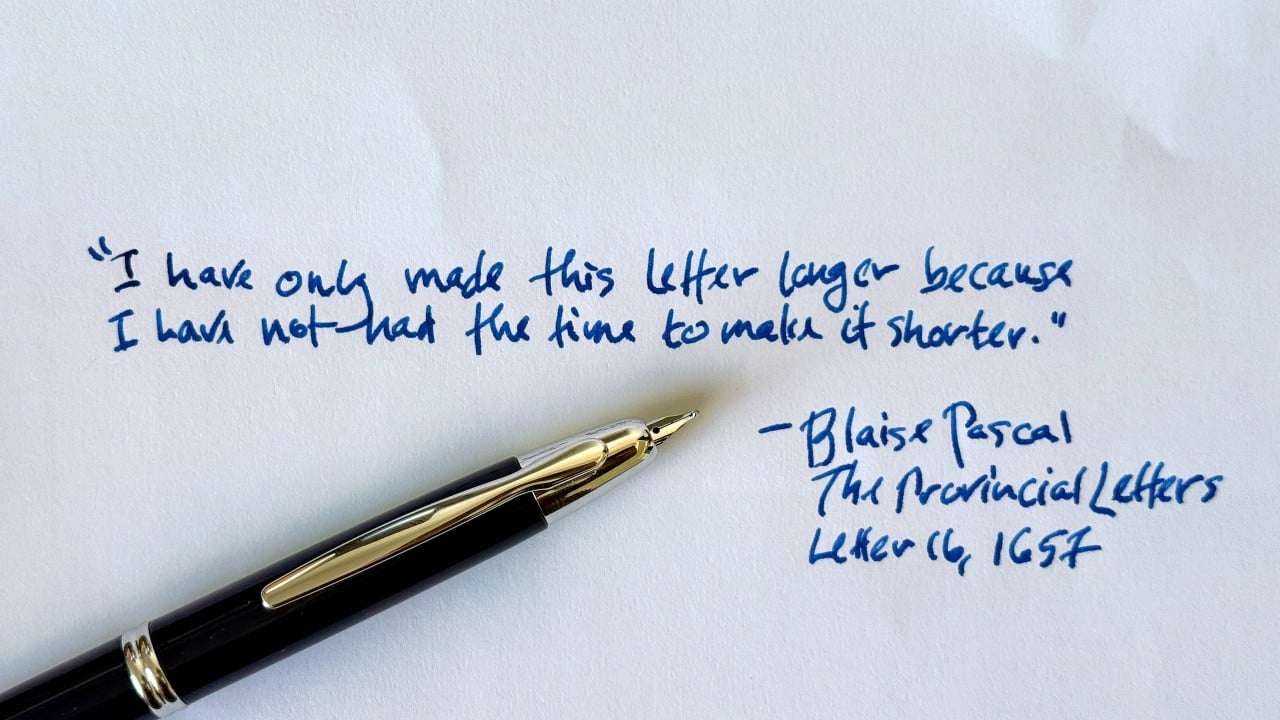
Blaise Pascal (1623-1662), the brilliant French mathematician, physicist, inventor, and philosopher, acknowledged the time and effort when he wrote, “I have only made this letter longer because I have not had the time to make it shorter”. Hundreds of years later, the guy who invented the calculator seems to predict the allure of AI slop.
But he also had another famous quote that’s perhaps even more relevant: "All of humanity's problems stem from man's inability to sit quietly in a room alone".